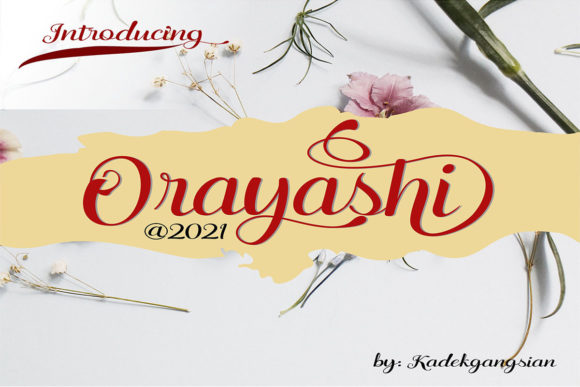
Orayashi: A Refined Script Font for Polished Branding
Choosing the Right Typeface for a Bakery Packaging Refresh
I recently worked with a small artisan bakery looking to elevate their packaging design. Their current labels felt generic, and they wanted something that reflected the care and craftsmanship behind each product. After testing several script fonts, we landed on Orayashi — a refined, elegant typeface that immediately gave their brand a more sophisticated and memorable identity.
Orayashi is a beautiful script font with a modern edge. It’s not overly ornate like some calligraphy styles, which makes it perfect for businesses that want to feel elegant without looking outdated. The subtle curves and balanced spacing give it a warm, approachable personality while still maintaining a polished finish.
How Orayashi Elevates Visual Branding
Typography plays a crucial role in how customers perceive a brand. First impressions are often made in seconds, and the right font can communicate professionalism, trust, and attention to detail. With Orayashi, the bakery’s new packaging felt instantly cohesive and intentional — a big step up from their previous off-the-shelf label fonts.
Because of its refined script style, Orayashi works especially well for short-form text like product names, taglines, and brand names. It’s a display font at heart, meaning it shines in headlines, logos, and packaging titles rather than long paragraphs. This makes it ideal for product labels, thank-you cards, wedding stationery, and social media graphics where visual impact matters most.
Real-World Applications for Small Businesses
Here are some of the ways we used Orayashi across the bakery’s branding materials:
- Product labels: Used for flavor names on cookie boxes and specialty bread packaging. The font’s elegant curves made each product feel more premium.
- Thank-you cards: Paired with a clean sans serif for body text, Orayashi added a personal, handcrafted touch to customer thank-you notes.
- Social media posts: For Instagram story highlights and promotional banners, the font gave a cohesive, editorial look that stood out in the feed.
- Logo design: The bakery’s new logo incorporated Orayashi for the brand name, giving it a distinct and memorable identity.
Each of these applications helped the bakery feel more consistent across touchpoints. That consistency is key for small businesses looking to build brand recognition and customer trust without a large marketing budget.
Readability Tips for Practical Use
While Orayashi is stunning, it’s important to use it thoughtfully. Since it’s a script font, readability can be affected at smaller sizes or on low-resolution screens. Here’s what to keep in mind:
- Use it for headlines and short phrases: Avoid using Orayashi for long blocks of text. It’s best suited for titles, logos, and accents.
- Check legibility on packaging: Print a test label or mockup before production. Some letters may blend together on small stickers or tags.
- Consider contrast: Pair it with a white or light background for maximum clarity, especially in digital use like website banners or Instagram templates.
Pairing Orayashi with Other Fonts
One of the best things about Orayashi is how well it pairs with other typefaces. A strong font pairing can make a brand feel both elegant and modern. Here are a few combinations that work well:
- Clean sans serif: Try pairing Orayashi with a minimalist font like Montserrat or Lato for a modern, balanced look — perfect for packaging and website headers.
- Elegant serif: For a more traditional aesthetic, combine it with a serif font like Playfair Display, especially for formal branding materials like invitations or luxury product labels.
- Handwritten font: If you want to keep the organic feel, use a more casual handwritten font for subheadings or supporting text.
These combinations allow you to maintain visual interest while ensuring readability and professional design.
What to Check Before Using Orayashi
Before incorporating any font into your brand materials, it’s important to verify the licensing and technical specs. Orayashi, as a commercial font, typically comes with a license that allows usage in product packaging, branding, and digital marketing — but always double-check the terms.
Also, make sure to explore the full character set. Orayashi often includes alternates, ligatures, and multiple weights, which can add versatility to your designs. Multilingual support is another consideration if your brand communicates in multiple languages or targets an international audience.
Finally, confirm the file formats included. Most premium fonts come in OpenType (.otf) and TrueType (.ttf) versions, which are compatible with most design software, including Adobe Creative Cloud, Canva, and Figma.